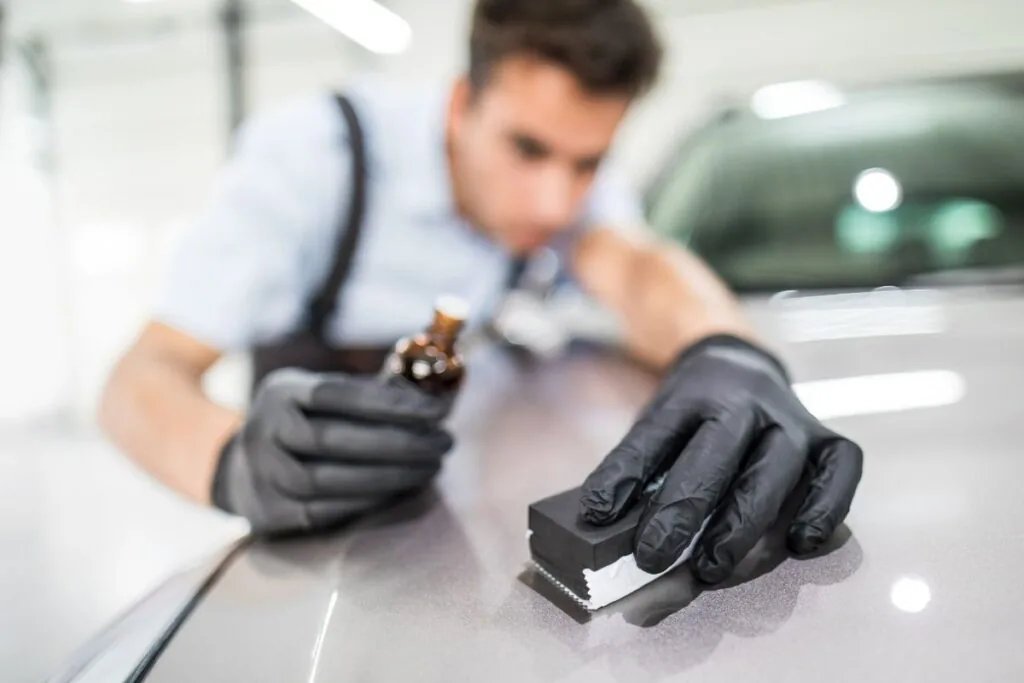
Ceramic Coating
A hard, semi-permanent clear layer over your paint that resists etching, chemicals and UV fade.
Learn more →A hard glass-like layer over your paint, applied after the paint is corrected — not sprayed over swirls and called protection.
A ceramic coating is a liquid polymer that cures into a hard, semi-permanent layer chemically bonded to your clear coat. Think of it as a sacrificial extra clear coat, a few microns thick, that takes the chemical punishment instead of your factory paint. It is hydrophobic, so water beads and sheets off rather than sitting on the panel; it is chemically resistant, so bird droppings, tree sap and insect remains have to work much harder to etch through; and it blocks UV, which is what causes red and black paint to fade and oxidise.
What it is not is armour. This is where most of the industry oversells. A coating does not stop stone chips, does not stop scratches from a trolley or a careless key, and does not stop hail. It also will not fix paint that is already swirled — cure a coating over swirl marks and you have sealed those swirls in under a hard layer for the next few years. That is why paint correction is the real work and the coating is the last twenty minutes.
Ceramic paint protection here starts from $700, and quality coating work in Australia generally runs between $700 and $2,000 including installation. The coating chemical itself is a small fraction of that. You are paying for hours: wash, iron and tar decontamination, clay, taping up, one or two machine polishing stages, a panel wipe, then layered application with cure time between coats. Our ceramic coating cost guide breaks down where each hour goes and what changes the number.
Melbourne is harder on duco than people expect, and it is hard in four different ways depending on where you park.
Then there is hail. Melbourne gets damaging hailstorms, and no coating and no film will stop a dent. Cover or garage is the only answer to that one.
We cover greater Melbourne, from the bay through the inner east and out to the west and south-east. The service areas page lists the suburbs we write about in detail, including Essendon and Dandenong. If your suburb is not listed, ring and ask — the boundary is about travel time, not postcode.
You call or send photos, we inspect the paint under proper lighting and tell you what it actually needs. If the paint is straight, we say so and quote a single-stage job. If it needs two stages, we explain what that buys you and what it costs. The car is generally with us for one to three days depending on correction and cure time. Before you book anything, read the frequently asked questions so you know exactly what you are getting — and contact us when you are ready.
Most of the labour in a coating job is decontamination and paint correction. Coating a swirled panel just seals the swirls in under glass.
A coating resists etching and makes washing easier. It will not stop stone chips, hail dents, trolley rash or key marks.
Bayside salt air, plane tree honeydew, summer UV and sudden cool-change rain each attack paint in a different way.
We look at the paint in proper light, tell you what correction it needs, then price the job. No surprises on collection day.
A hard, semi-permanent clear layer over your paint that resists etching, chemicals and UV fade.
Learn more →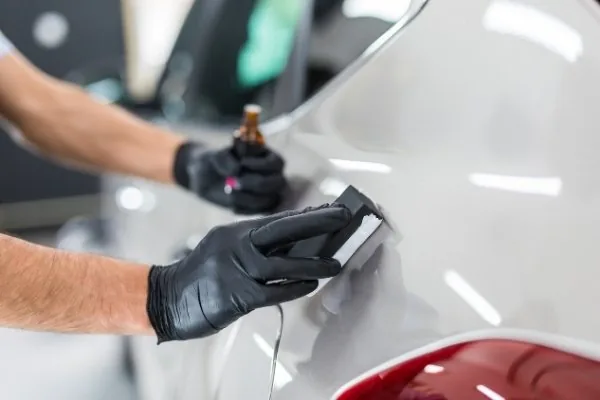
Thick urethane film on the panels that cop stone chips. The only thing here that stops physical damage.
Learn more →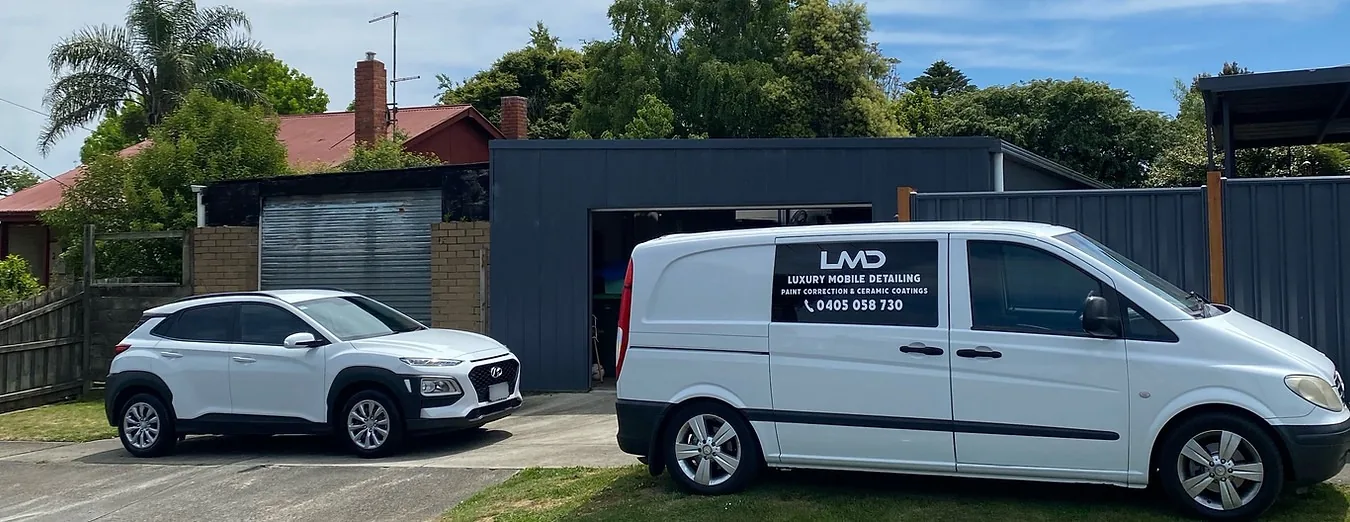
Machine polishing that removes swirls and oxidation before anything gets sealed over the top.
Learn more →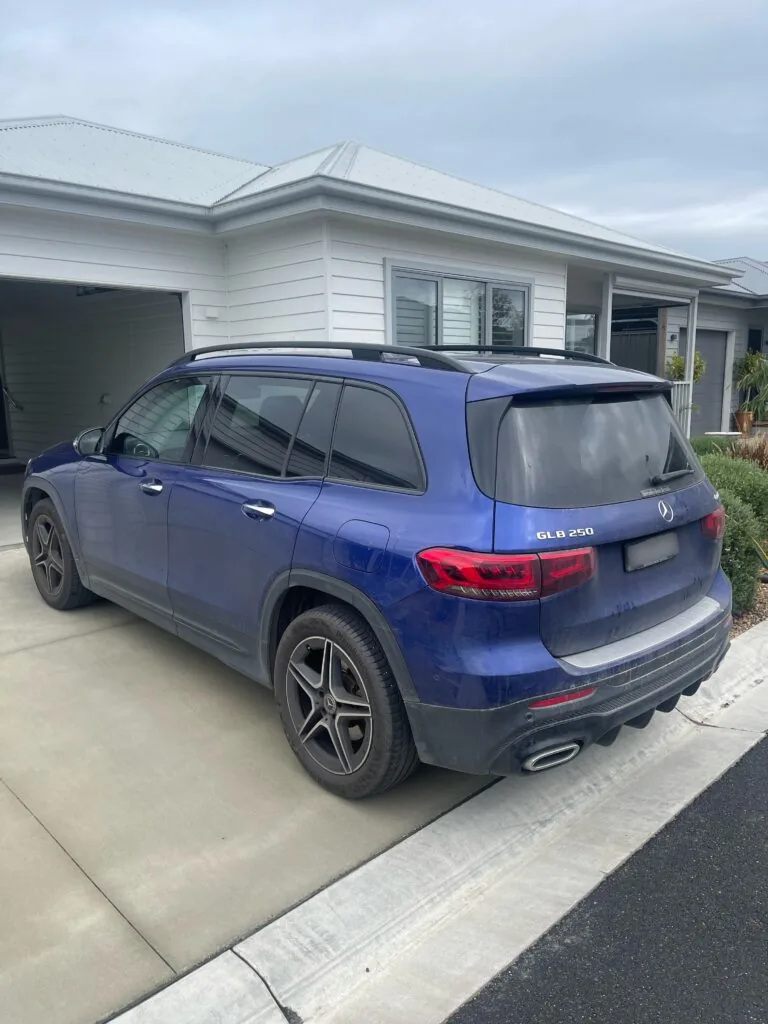
Fabric, leather and plastic coatings that buy you time on spills and slow UV cracking on the dash.
Learn more →
Heat-tolerant coating on wheel faces and barrels, plus a hydrophobic layer on the windscreen.
Learn more →Ceramic paint protection starts from $700 and most jobs land between $700 and $2,000. The variable is not the coating, it is the preparation. A near-new car with straight paint sits at the bottom of that range. A ten-year-old daily that needs two-stage correction sits at the top, because correction is measured in hours of machine work.
No. A ceramic coating is a few microns of hard resin. It resists light wash marring and chemical etching, but a stone off the Monash at 100km/h will still chip the paint, a shopping trolley will still scratch it, and hail will still dent the panel. Paint protection film is the only product here that absorbs physical impact.
Two to five years for a professionally applied coating, depending on the product, how the car is stored and how it is washed. Manufacturer claims of up to five years assume garaging and correct maintenance washing. A car left on the street under plane trees and washed at a servo brush will lose its hydrophobic behaviour much sooner.
Yes, just less painfully. The coating stops contamination bonding as hard, so dirt releases with less contact and less chance of new swirls. You still need a fortnightly two-bucket or touchless wash, and you still need to get bird droppings and tree sap off quickly, because both are acidic enough to etch a coating given a warm afternoon.